For Chinese companies planning to establish warehouses, factories, or distribution operations in Japan, selecting the right logistics equipment is a critical part of building an efficient and reliable operation.
Warehouse space in Japan can be limited, while businesses are expected to maintain high standards of storage efficiency, operational safety, accuracy, and productivity. Simply installing standard equipment is not always enough. Equipment should be selected according to the building layout, cargo characteristics, handling methods, and actual workflow.
This article introduces the essential logistics equipment Chinese companies should consider when entering the Japanese market, including light to medium-duty racks, pallet racks, custom-designed racks, conveyor systems, and workplace facilities.
ー目次ー
When setting up logistics operations in Japan, companies need to consider more than storage capacity alone.
An effective warehouse should balance several requirements:
Planning these factors together helps create a warehouse that is not only efficient at launch but also easier to operate as the business grows.
Light to Medium-Duty Racks: Maximize Warehouse Storage Space
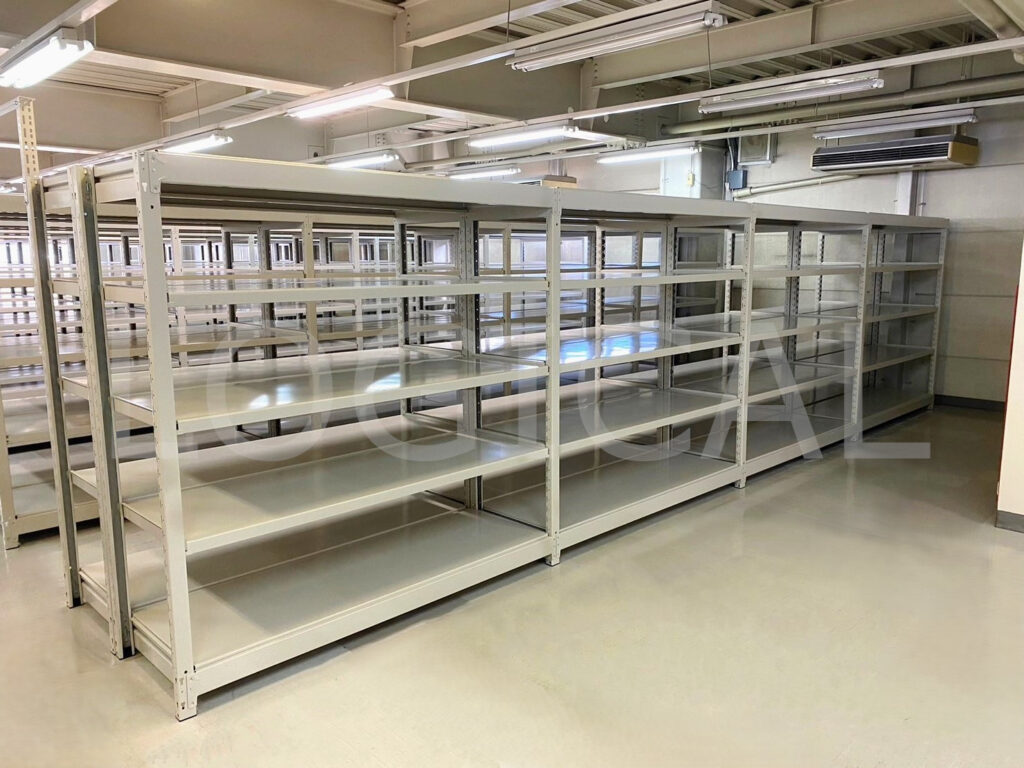


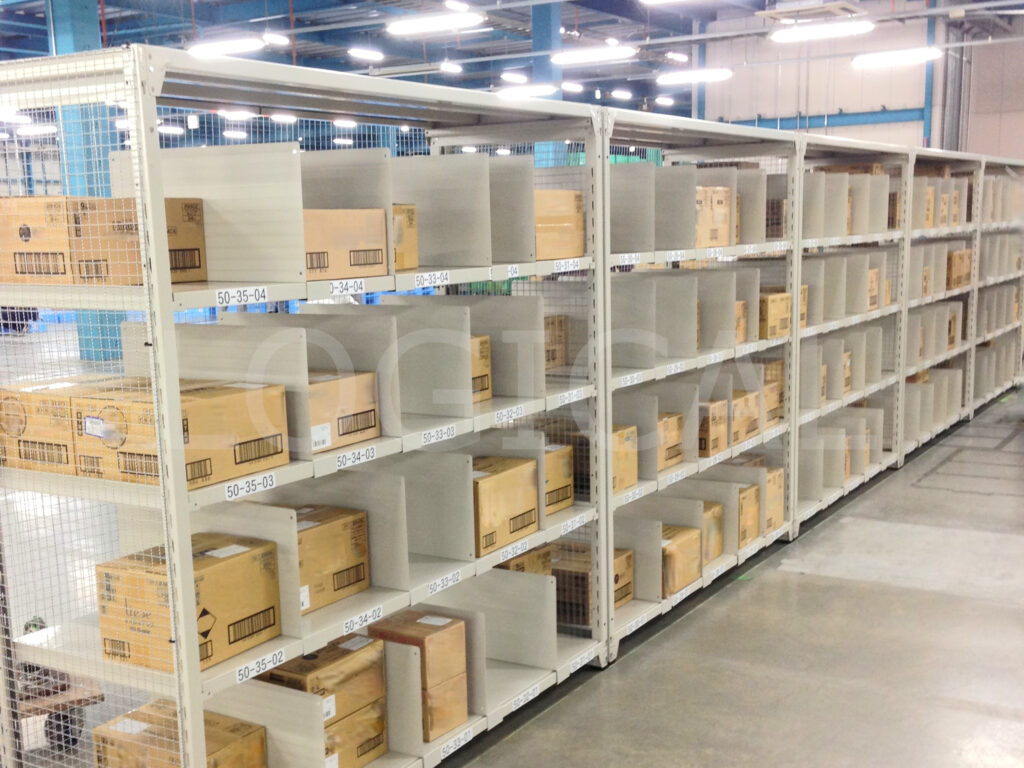
Light to medium-duty racks are widely used for storing small parts, cartons, components, tools, and medium-weight goods.
Rather than simply installing as many racks as possible, it is important to consider aisle width, picking routes, storage frequency, and product dimensions when designing the layout.
Light to medium-duty racks help organize products by category and make inventory easier to identify and retrieve.
They are particularly suitable for warehouses that handle many SKUs and require frequent manual picking.
By optimizing rack dimensions and aisle layouts, companies can improve storage density without unnecessarily sacrificing operational efficiency.
Pallet Racks: Safe and Efficient Storage for Heavy and Palletized Goods

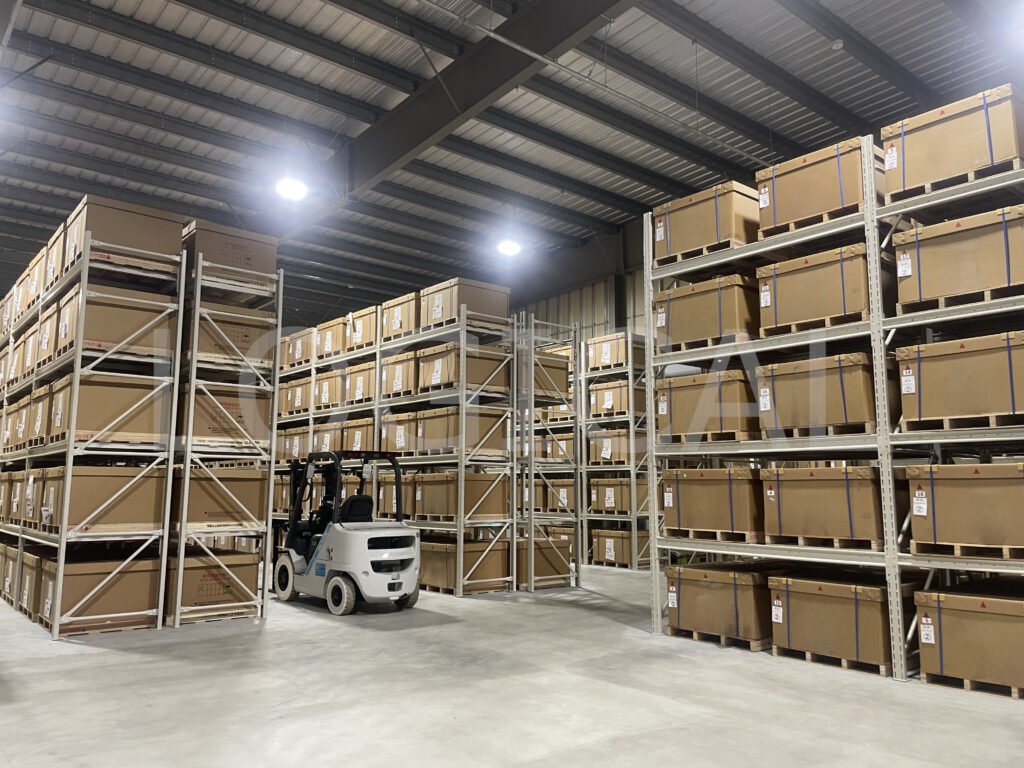
For warehouses handling palletized or heavy goods, pallet racks are one of the most important storage systems to consider.
The appropriate specification depends on factors such as pallet size, maximum load, forklift type, warehouse ceiling height, and required aisle width.
A properly designed pallet rack system allows companies to use vertical warehouse space efficiently while maintaining smooth forklift access.
It is particularly suitable for:
Correct layout planning is essential to balance storage capacity, forklift maneuverability, and operational safety.
Custom-Designed Racks: Storage Solutions for Special Cargo
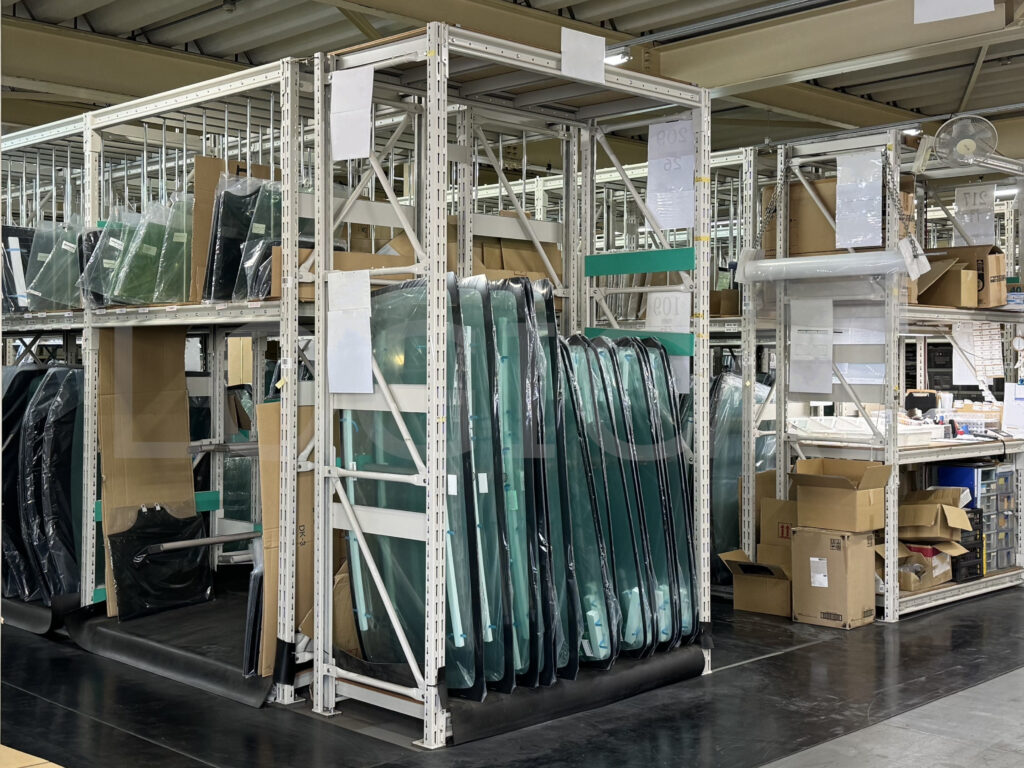
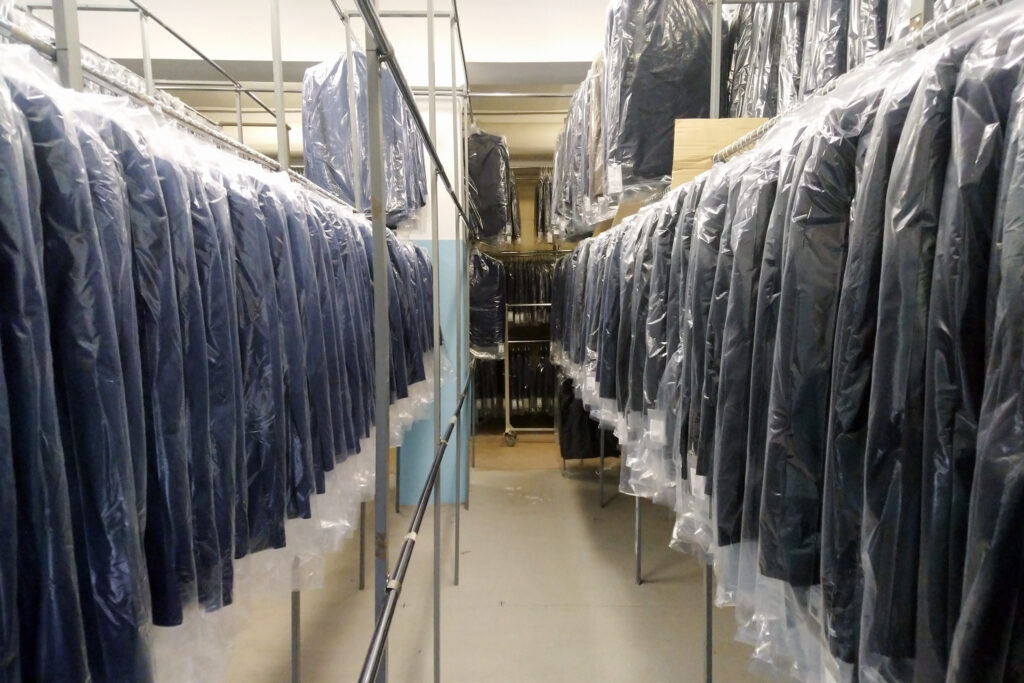
Not every product can be stored safely and efficiently on standard warehouse racks.
Long materials, irregularly shaped products, fragile components, molds, specialized parts, and other non-standard goods may require a custom-designed storage system.
Custom racks help prevent inefficient storage methods such as excessive floor storage or unsuitable stacking.
They can also improve accessibility and reduce unnecessary handling by providing designated storage positions for specialized goods.
For Chinese companies entering Japan with unique products or manufacturing processes, customized storage equipment can be an effective way to adapt warehouse operations to local facilities.
Conveyor Systems: Improve Material Handling and Workflow Efficiency
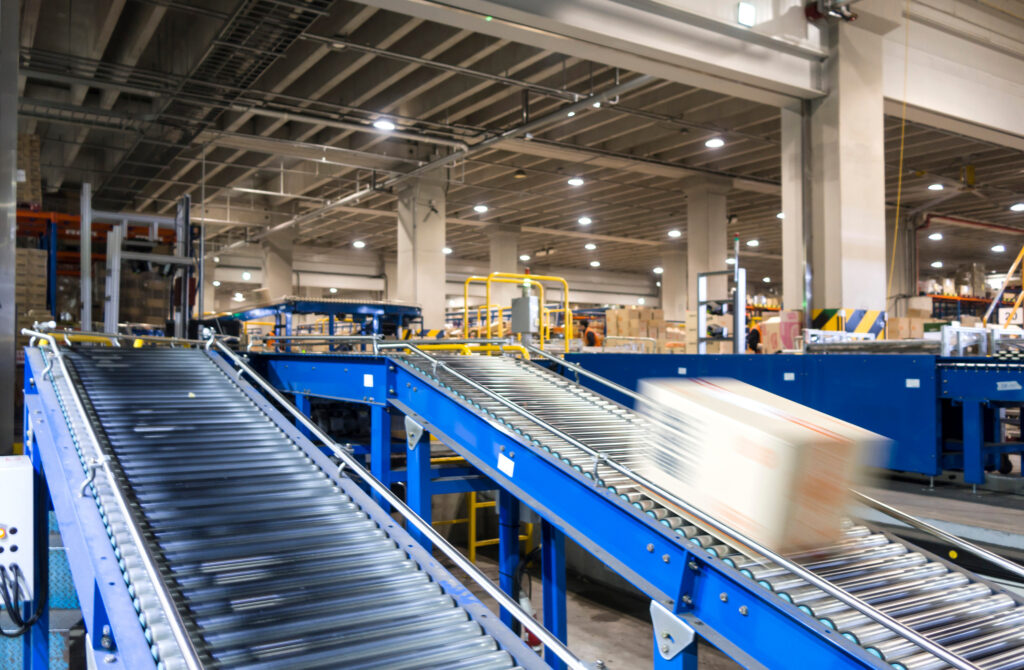
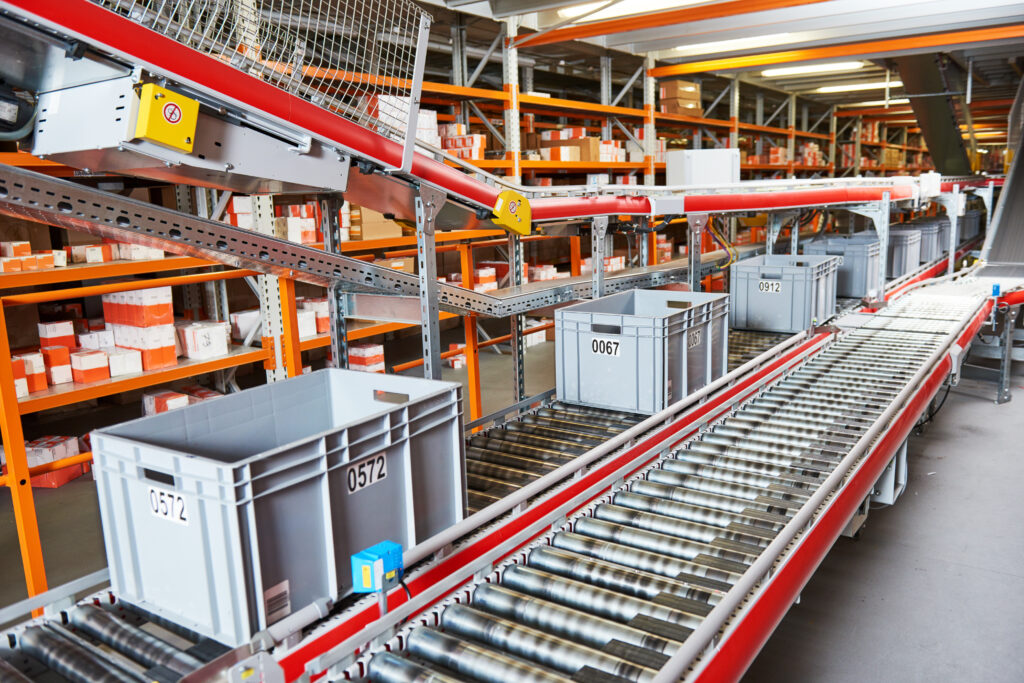
As shipment volumes increase, manual transportation between processes can become a major operational bottleneck.
A properly designed conveyor system can streamline material movement between receiving, production, inspection, picking, packing, and shipping areas.
Conveyors reduce unnecessary manual transportation and help standardize the movement of goods.
Depending on the operation, they can contribute to:
The key is not simply installing a conveyor, but designing the system around the actual flow of goods and workers.
Beyond Storage Equipment: Create a Safe and Comfortable Workplace
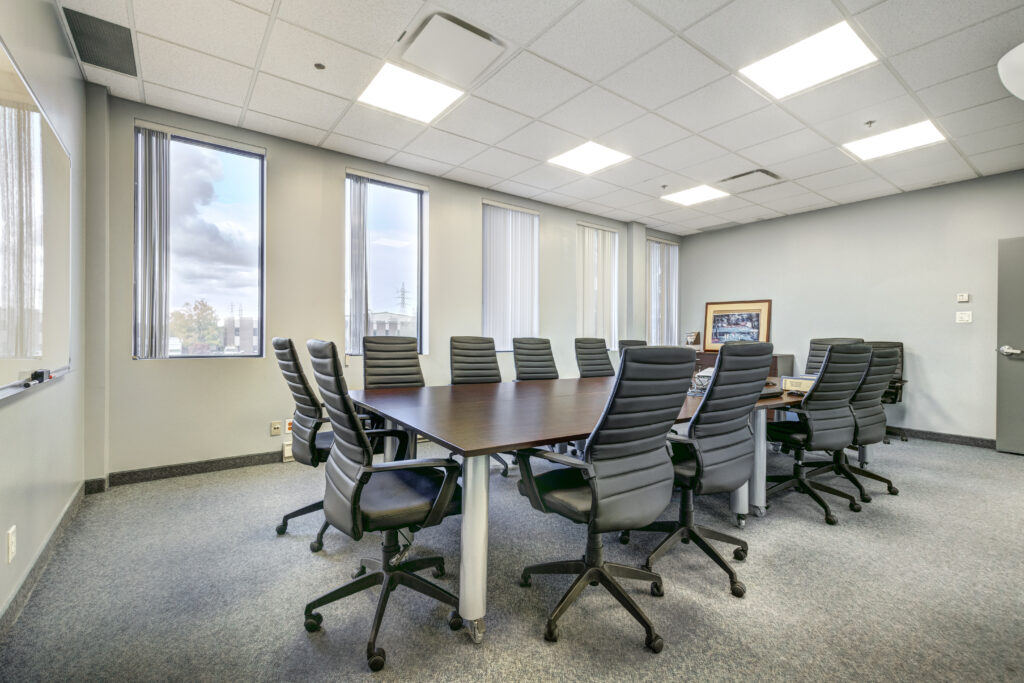
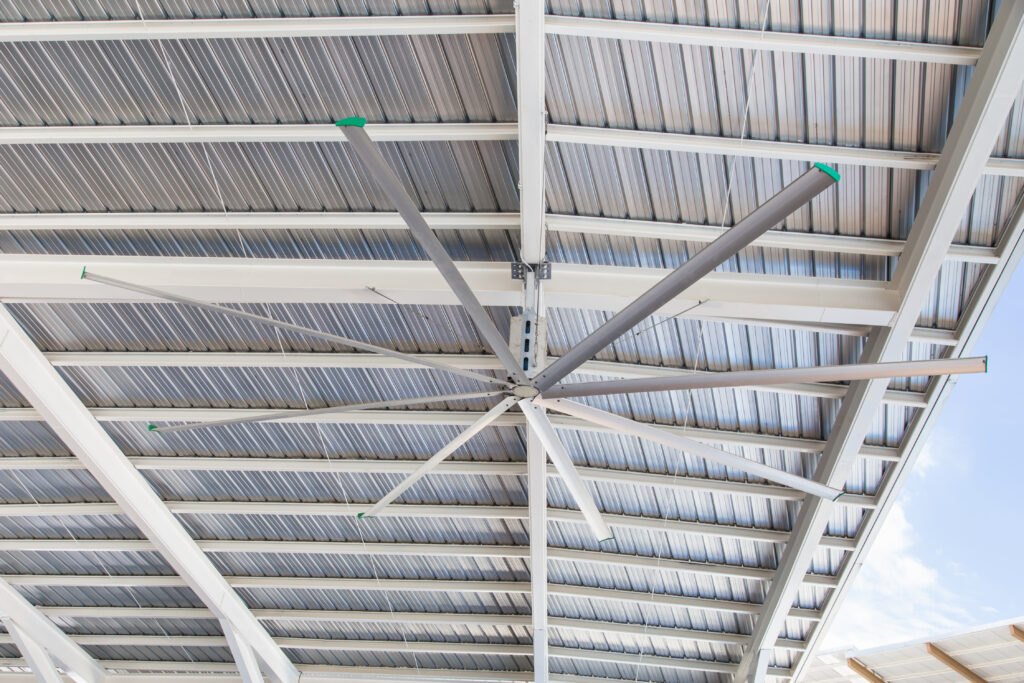
Efficient logistics operations require more than racks and conveyors. The working environment itself also affects productivity, safety, and employee comfort.
Partitions and interior construction can be used to create dedicated spaces inside or adjacent to warehouses, including:
These facilities can be planned according to employee numbers, operational flow, and available warehouse space.
Temperature control is particularly important in large warehouses and factories.
Depending on the facility, solutions may include air-conditioning equipment, ventilation systems, ceiling fans, partitions, and other environmental improvement measures.
Safety equipment should also be considered according to forklift routes, pedestrian areas, loading zones, machinery locations, and other site-specific risks.
Before selecting equipment, companies should first analyze the actual operating conditions of the warehouse.
Important factors include:
For example, maximizing rack density without considering forklift aisle width may increase nominal storage capacity while reducing daily productivity.
For this reason, logistics equipment should be planned as part of the overall warehouse layout, rather than selected individually.
For overseas companies entering Japan, coordinating multiple equipment suppliers and contractors can make warehouse setup more complicated.
Projects may involve not only equipment procurement but also layout planning, assembly, electrical work, interior construction, air conditioning, and other related work.
By coordinating these elements together, it becomes easier to create a warehouse environment in which storage equipment, material-handling systems, and workplace facilities function as one integrated operation.
Success in the Japanese market requires logistics infrastructure that matches both your products and your operational requirements.
The main equipment to consider includes:
The most effective solution will vary depending on warehouse dimensions, cargo characteristics, handling equipment, shipment volume, and future business plans.
Logical provides support for logistics facilities in Japan, from equipment selection and warehouse layout planning to installation and related construction work.
If you are a Chinese company planning to establish or improve a warehouse, factory, or logistics facility in Japan, we can help you develop a solution tailored to your operational requirements.
保管ラック
特殊ラック
保管ラック
特殊ラック

関連ワード
今回も最後までお読みいただきありがとうございます。
このコラムを読んだ方は次の記事も合わせて読むと、さらに御社の倉庫や工場のレベルアップに繋がると思います。ぜひご覧ください!
保管ラック 特殊ラック 2026.08.07
2026.08.25
保管ラック 特殊ラック 2026.08.25
倉庫の設備のことなら
東京ロジカルにお任せください!
お電話 :  03-6658-4419

 CONTACT
 ポスト
ポスト シェアする
シェアする